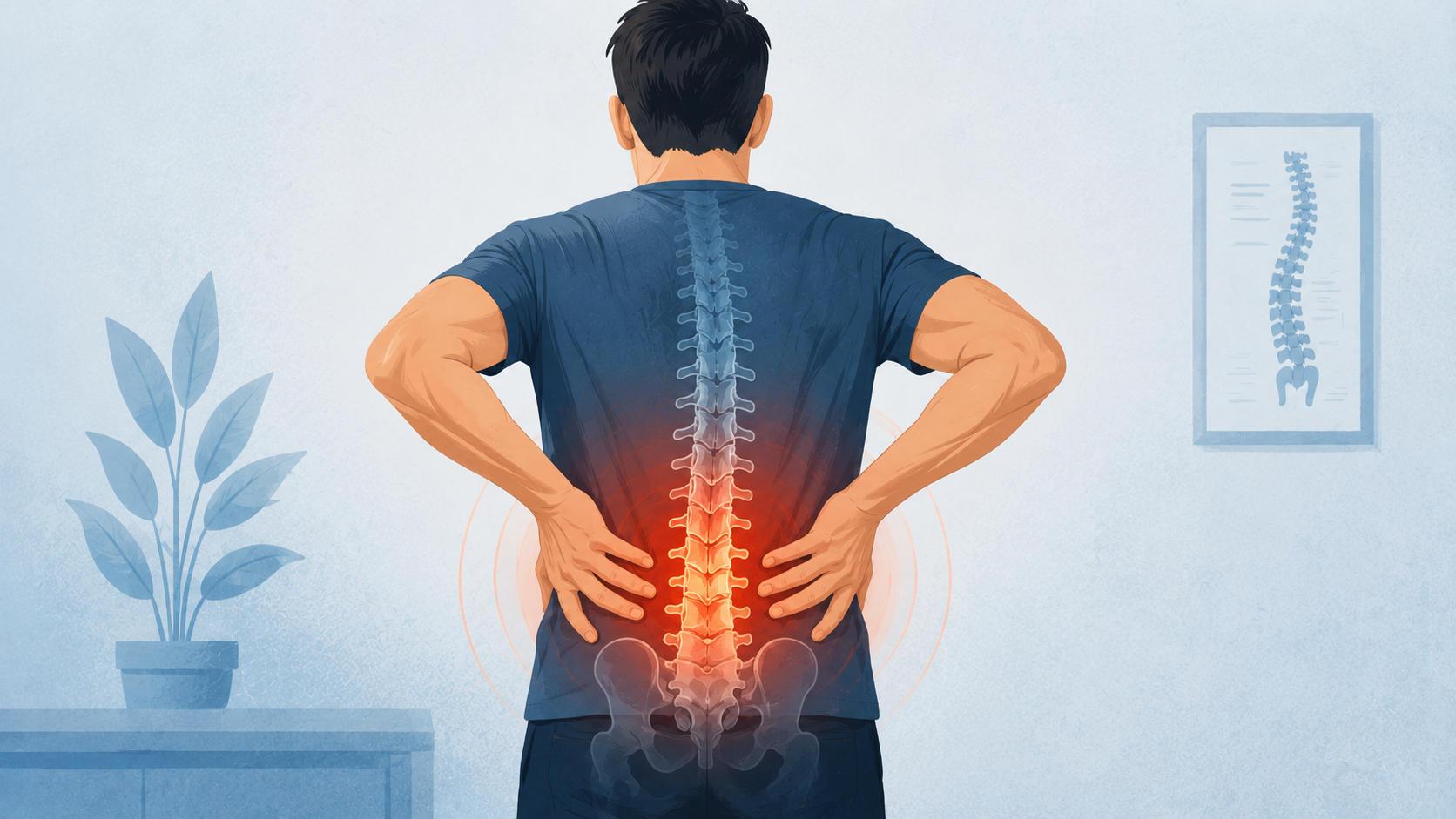
If you have been told you may need spinal decompression surgery, or you have come across the term while reading about your symptoms, you may be wondering exactly what it means. It sounds more daunting than it often is. In this article I will explain what spinal decompression involves, the conditions it treats, and who is likely to benefit.
The spinal cord and the nerves that branch off it travel through a bony canal in the spine. In some conditions, this space becomes narrowed, or a structure such as a disc presses inwards, and the nerves or spinal cord come under pressure. This pressure is what produces symptoms – pain, numbness, pins and needles, or weakness, often felt not in the back itself but in the arms or legs.
Spinal decompression is simply surgery to relieve that pressure. The aim is to create more space for the nerves or spinal cord, allowing them to function normally again. It is a principle rather than a single operation, and there are several specific procedures that achieve it.
Decompression surgery is used for conditions where the nerves or spinal cord are being compressed. The most common include:
The details depend on the specific problem and its location. For a prolapsed disc causing sciatica, a microdiscectomy removes the portion of disc pressing on the nerve. For spinal stenosis, a procedure called a laminectomy or decompression removes a small amount of bone and ligament to widen the canal. Where the neck is involved, decompression may be carried out from the front or the back of the neck depending on the cause.
Wherever possible, I use a minimally invasive approach – achieving the same result through smaller incisions and with less disturbance to the surrounding muscles. For suitable patients, this can mean less pain afterwards, a shorter hospital stay, and a quicker return to normal activities.
Decompression surgery tends to work best when there is clear evidence of nerve or spinal cord compression that matches the symptoms, and when those symptoms have not settled with conservative treatment. It is particularly good at relieving the pain that travels into a limb – the leg pain of sciatica, for instance, often responds very well.
As with all spinal surgery, it is not right for everyone, and the majority of spinal conditions are managed without an operation. The decision always rests on a careful assessment of the individual problem.
If you have been told you may need decompression surgery, or you have symptoms such as persistent leg pain, numbness or weakness, a specialist assessment will clarify whether it is the right option for you. As a Consultant Neurosurgeon in Cambridge, I can explain what is causing your symptoms and talk you through whether decompression would help, and what it would involve. You can read more about my spinal surgery in Cambridge.